Application of Laccase Enzyme in Wastewater Treatment Formulations
Formulation guide for laccase enzyme in industrial wastewater: pH, dose, assay, pilot validation, COA/TDS/SDS, and cost-in-use checks.
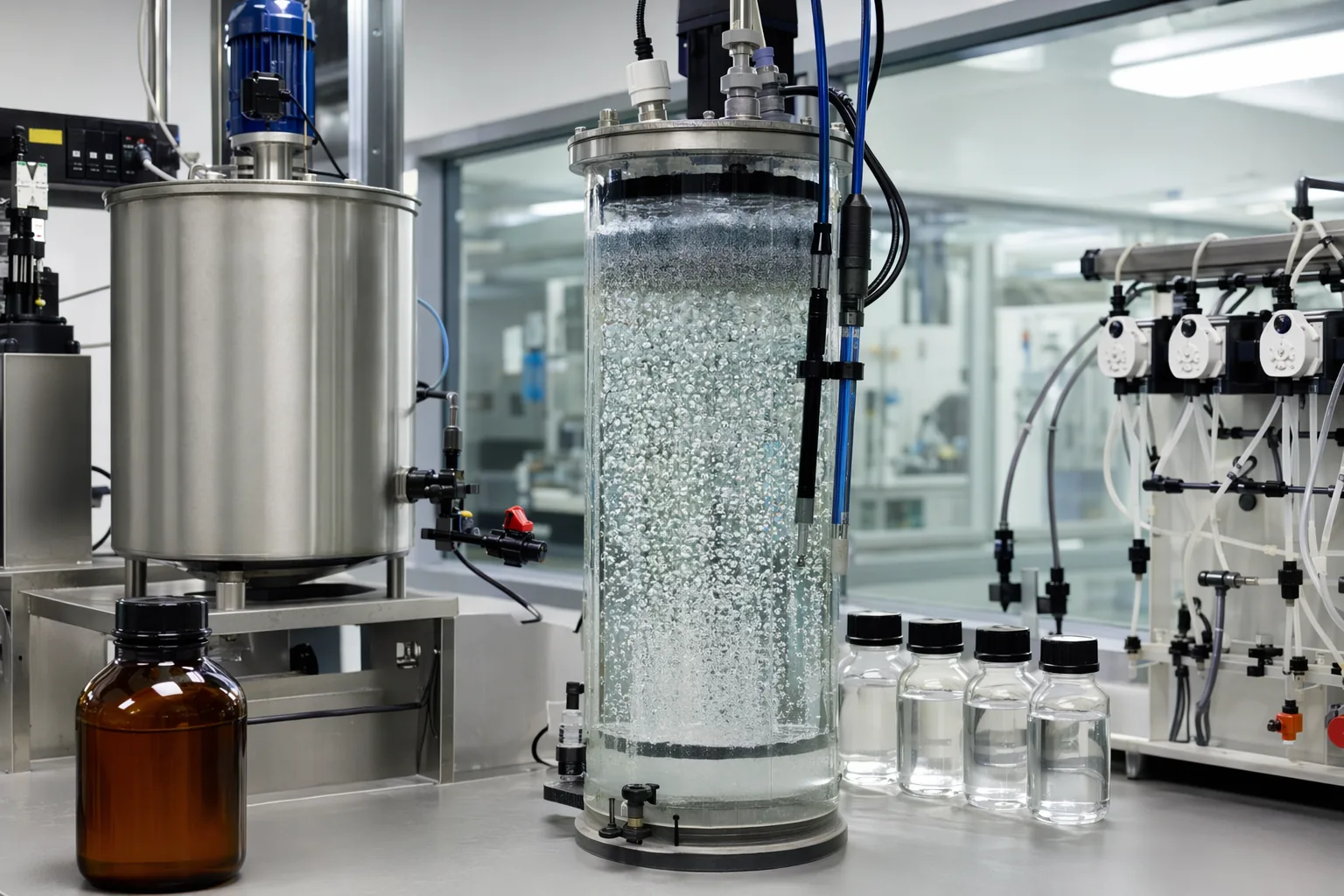
A practical B2B guide for formulators evaluating laccase enzyme for color removal, phenolic compound oxidation, polishing steps, and industrial effluent bioremediation.
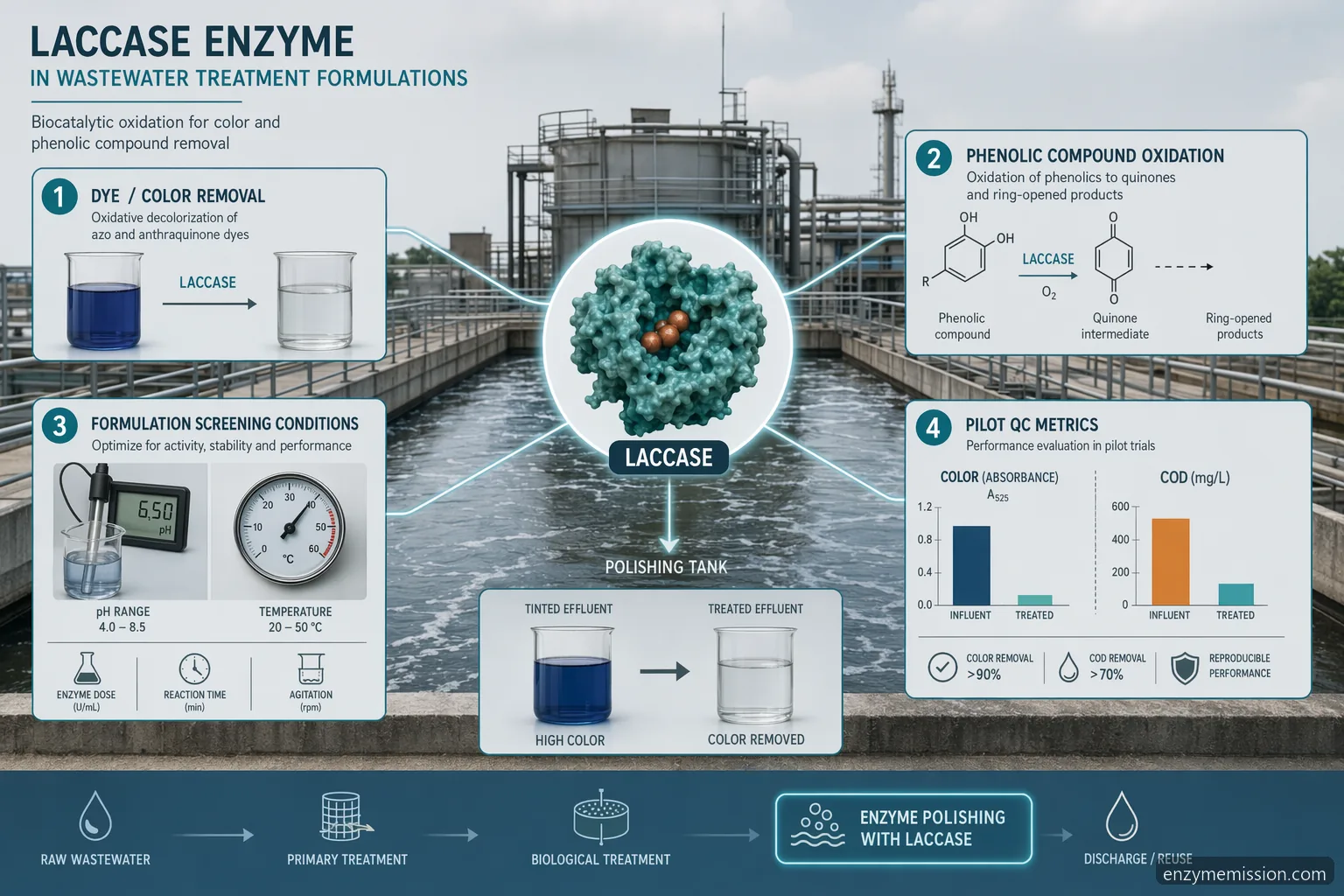
Why Laccase Fits Industrial Wastewater Formulation
The application of laccase enzyme in wastewater treatment is based on its ability to catalyze one-electron oxidation of phenolic and related aromatic substrates while using molecular oxygen as the terminal electron acceptor. In practice, formulators evaluate laccase for textile dye decolorization, phenolic wastewater polishing, pulp and paper effluent treatment, refinery or resin wastewater support, and bioremediation streams containing lignin-derived compounds. Laccase enzyme function is not the same as bulk COD removal in every wastewater. It may transform target chromophores or phenolics without fully mineralizing all organics, so performance must be verified by application-specific analytics. For B2B buyers, the main value is targeted oxidation under milder conditions than many chemical oxidants, especially where residual peroxide, high salinity, surfactants, metal ions, and pH variation can be controlled. The best formulation approach starts with effluent characterization before selecting enzyme grade, dose, and contact system.
Common targets: phenols, substituted phenols, azo dye intermediates, lignin fragments, and some endocrine-active aromatics. • Best fit: polishing, decolorization, toxicity reduction support, or pretreatment before biological treatment. • Not a universal replacement for primary clarification, nutrient removal, or all advanced oxidation processes.
Formulation Strategy for Laccase Wastewater Products
A laccase wastewater formulation can be supplied as a liquid concentrate, stabilized liquid blend, soluble powder, or immobilized enzyme system depending on plant handling needs. Liquid products are easier to meter into equalization tanks or side-stream reactors, while immobilized laccase can improve reuse potential and reduce enzyme carryover when the process design supports fixed-bed, membrane, or packed-carrier operation. Stabilizers may include compatible polyols, salts, buffers, and preservatives listed in the SDS, but the formulation must avoid ingredients that suppress activity or add problematic load to the effluent. The industrial application of laccase enzyme often benefits from upstream screening for chlorine, peroxide, sulfide, strong reducing agents, and heavy metals, because these can reduce activity. When considering laccase enzyme production and their application, buyers should also compare fermentation source, downstream purification level, carrier system, and lot consistency rather than focusing only on headline activity.
Liquid concentrate: convenient dosing, requires cold-chain or controlled storage if specified. • Powder: better shipping efficiency, requires safe dust handling and complete dissolution testing. • Immobilized format: potential reuse, but needs hydraulic and fouling validation.
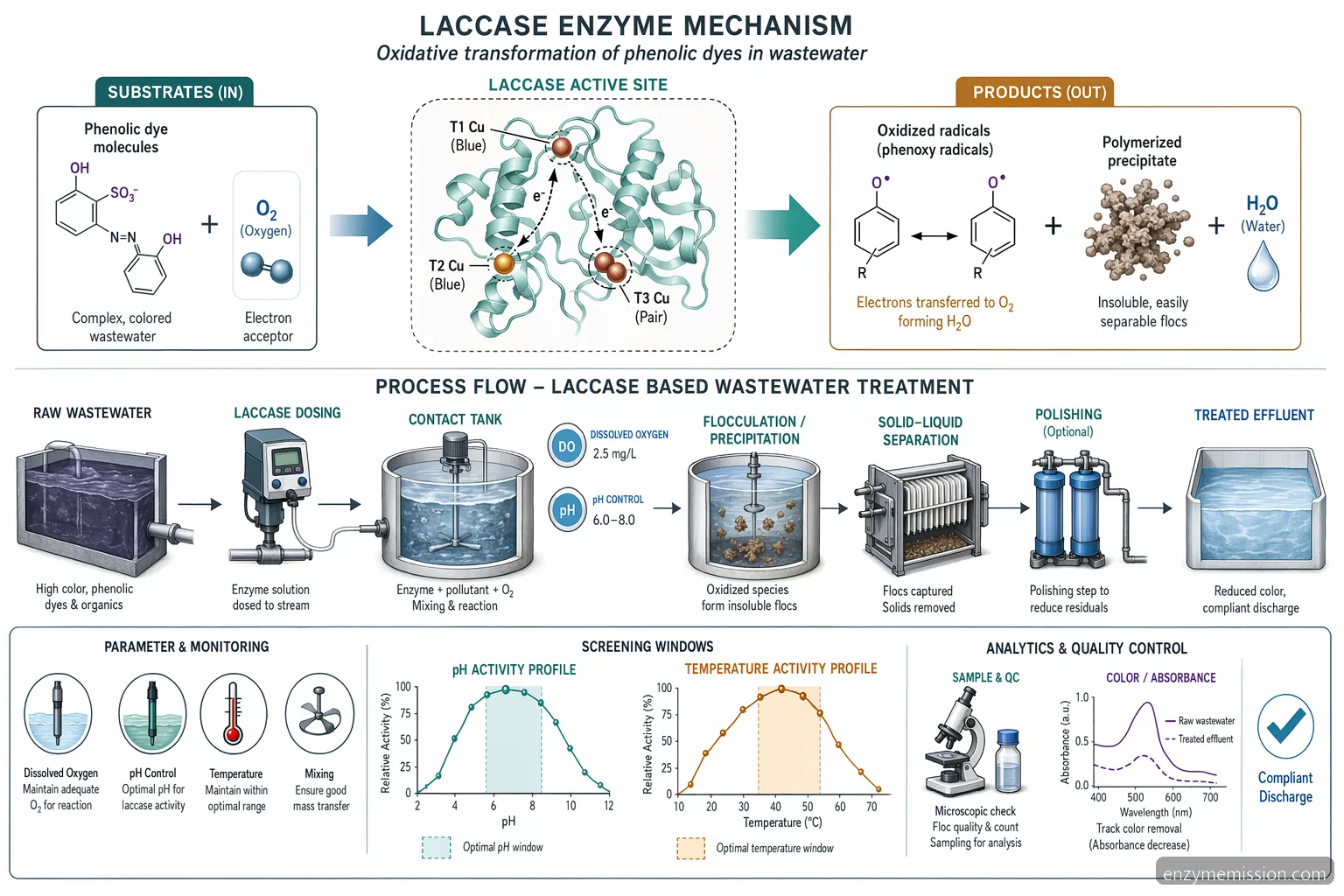
Typical Process Conditions to Screen First
Most fungal laccase enzyme grades perform best in mildly acidic conditions, often around pH 3.5–6.0, while some bacterial or engineered grades may tolerate neutral to alkaline ranges. Wastewater plants should not assume compatibility at pH 7–9 without supplier data and pilot confirmation. Common screening temperatures are 25–50 °C, with some grades showing useful activity up to about 55 °C depending on exposure time and formulation stability. Initial dosage trials commonly start around 10–500 U/L of wastewater for soluble enzyme, then adjust based on color units, phenolic load, contact time, and inhibitors. Dissolved oxygen is important because laccase uses oxygen during oxidation; low-aeration systems may underperform. Contact times can range from 30 minutes to several hours. Mediation chemistry can expand substrate range, but mediators must be assessed for cost, toxicity, discharge acceptance, and regulatory fit.
Start pH screen: 4.0, 5.0, 6.0, 7.0, and plant operating pH. • Start temperature screen: ambient, 35 °C, 45 °C, and expected process maximum. • Track dissolved oxygen, oxidation-reduction potential, color, phenolics, COD, and toxicity indicators.
Pilot Validation and QC Measurements
Pilot validation should use representative composite wastewater, not only clean model solutions. Bench testing can identify whether the environment application of laccase enzyme is technically promising, but side-stream pilots reveal the effects of suspended solids, salts, surfactants, shock loads, and biological treatment integration. A practical pilot plan includes untreated control, heat-inactivated enzyme control, dose ladder, pH adjustment option, contact-time curve, and compatibility check with downstream coagulation, filtration, or activated sludge. Laccase enzyme assay data should be requested from the supplier and repeated internally if the plant has enzyme QC capability. Assays may use ABTS, syringaldazine, guaiacol, or another defined substrate, and activity units are only comparable when method, pH, temperature, and substrate concentration are the same. Final success criteria should include target contaminant reduction, decolorization, effluent toxicity trend, sludge impact, chemical savings, and total cost-in-use.
Use real effluent across normal and high-load production days. • Include blanks and inactivated-enzyme controls to separate adsorption from enzymatic oxidation. • Confirm that treated effluent remains compatible with discharge permit parameters and downstream biology.
Supplier Documents Buyers Should Request
Before scale-up, B2B buyers should request the certificate of analysis, technical data sheet, safety data sheet, recommended storage conditions, activity assay method, shelf-life statement, and handling guidance. The COA should show lot number, activity result, assay basis, appearance, and any agreed quality attributes. The TDS should describe the laccase enzyme structure class or source at an appropriate commercial level, optimal pH and temperature ranges, stability limits, formulation type, and recommended application window. The SDS should support safe warehouse, dosing, spill, and personal protective equipment procedures. For supplier qualification, ask for sample-to-commercial lot traceability, change notification practice, lead time, minimum order quantity, packaging options, and technical support for pilot trials. Avoid comparing laccase enzyme price only by kilogram; a lower-activity or less stable product can cost more when normalized to treated cubic meters.
Request COA, TDS, SDS, sample lot number, and assay protocol. • Ask whether activity is reported per gram, per milliliter, or per delivered product mass. • Confirm packaging, storage temperature, retest period, and batch-to-batch variation.
Cost-in-Use and Scale-Up Considerations
The commercial application of laccase enzyme should be judged by cost-in-use, not purchase price alone. A useful calculation includes enzyme dose, actual activity retention in wastewater, contact time, pH adjustment chemicals, aeration energy, carrier replacement if immobilized, reduced chemical oxidant use, sludge changes, and disposal effects. Plants treating variable effluent may need a control strategy based on color, phenolic concentration, flow, or ORP rather than a fixed dose. Scale-up should also address mixing energy, enzyme residence time, shear exposure, dosing pump compatibility, and cleaning procedures for reactors or carriers. In pulp bleaching and laccase lignin applications, the same principle applies: enzyme performance depends on substrate accessibility, process pH, temperature, and oxidation environment. For wastewater, the most reliable business case is built from pilot data showing repeatable treatment outcomes across production cycles.
Normalize cost by treated cubic meter or kilogram of target contaminant removed. • Include pH correction, aeration, labor, QA testing, and waste-handling costs. • Use pilot results to define acceptance limits before plant-wide implementation.
Technical Buying Checklist
Buyer Questions
The main application of laccase enzyme in wastewater is targeted oxidation of phenolic compounds, dye chromophores, lignin-derived aromatics, and selected recalcitrant organics. It is often used as a polishing, pretreatment, or side-stream step rather than a stand-alone treatment for all COD. Results depend strongly on wastewater composition, pH, oxygen availability, contact time, and inhibitors, so pilot validation with real effluent is essential.
Start with a laboratory dose ladder expressed in activity units per liter, not only product weight. A common first screen is 10–500 U/L, adjusted for color, phenolic concentration, hydraulic residence time, and activity loss in the wastewater matrix. The final dose should be selected by cost-in-use, including pH adjustment, aeration, enzyme stability, target reduction, and downstream treatment impact.
Many commercial fungal laccase grades work best around pH 3.5–6.0, while some grades may tolerate neutral or alkaline conditions. Temperature screening commonly covers ambient conditions through 45–50 °C, with higher temperatures requiring stability confirmation. Because enzyme source and formulation matter, the supplier’s TDS should guide the initial window, and the plant should verify performance using its own wastewater.
Laccase enzyme assay methods commonly use substrates such as ABTS, syringaldazine, or guaiacol under defined pH and temperature conditions. Activity values are not automatically interchangeable across methods, so procurement teams should request the supplier’s assay protocol and COA for each lot. For internal QC, compare incoming material against a retained reference sample and confirm activity retention after storage and dosing trials.
Compare laccase enzyme price by treated volume or performance target, not only by kilogram. Include declared activity, assay basis, formulation stability, shipping and storage needs, required dose, pH correction, aeration, technical support, and batch consistency. A product with a higher purchase price may offer lower cost-in-use if it retains activity better in the actual wastewater and reduces treatment chemicals or rework.
Related Search Themes
laccase enzyme, laccase enzyme production and their application, industrial application of laccase enzyme, environment application of laccase enzyme, laccase enzyme structure, laccase enzyme price
Laccase for Research & Industry
Need Laccase for your lab or production process?
ISO 9001 certified · Food-grade & research-grade · Ships to 80+ countries
Frequently Asked Questions
What is the main application of laccase enzyme in wastewater treatment?
The main application of laccase enzyme in wastewater is targeted oxidation of phenolic compounds, dye chromophores, lignin-derived aromatics, and selected recalcitrant organics. It is often used as a polishing, pretreatment, or side-stream step rather than a stand-alone treatment for all COD. Results depend strongly on wastewater composition, pH, oxygen availability, contact time, and inhibitors, so pilot validation with real effluent is essential.
How should a plant choose the right laccase enzyme dosage?
Start with a laboratory dose ladder expressed in activity units per liter, not only product weight. A common first screen is 10–500 U/L, adjusted for color, phenolic concentration, hydraulic residence time, and activity loss in the wastewater matrix. The final dose should be selected by cost-in-use, including pH adjustment, aeration, enzyme stability, target reduction, and downstream treatment impact.
What pH and temperature are suitable for laccase wastewater trials?
Many commercial fungal laccase grades work best around pH 3.5–6.0, while some grades may tolerate neutral or alkaline conditions. Temperature screening commonly covers ambient conditions through 45–50 °C, with higher temperatures requiring stability confirmation. Because enzyme source and formulation matter, the supplier’s TDS should guide the initial window, and the plant should verify performance using its own wastewater.
How is laccase enzyme activity checked for quality control?
Laccase enzyme assay methods commonly use substrates such as ABTS, syringaldazine, or guaiacol under defined pH and temperature conditions. Activity values are not automatically interchangeable across methods, so procurement teams should request the supplier’s assay protocol and COA for each lot. For internal QC, compare incoming material against a retained reference sample and confirm activity retention after storage and dosing trials.
How should buyers compare laccase enzyme price from suppliers?
Compare laccase enzyme price by treated volume or performance target, not only by kilogram. Include declared activity, assay basis, formulation stability, shipping and storage needs, required dose, pH correction, aeration, technical support, and batch consistency. A product with a higher purchase price may offer lower cost-in-use if it retains activity better in the actual wastewater and reduces treatment chemicals or rework.
Related: Laccase for Industrial Oxidation Jobs
Turn This Guide Into a Supplier Brief Request a laccase enzyme sample, COA/TDS/SDS review, and pilot dosing guidance for your wastewater stream. See our application page for Laccase for Industrial Oxidation Jobs at /applications/laccase-enzyme-price-india/ for specs, MOQ, and a free 50 g sample.
Contact Us to Contributehello@mail.enzymemission.com