Laccase Enzyme Applications: Wastewater Treatment Formulation Guide
Formulate laccase enzyme for wastewater treatment with pH, temperature, dosage, QC, COA/TDS/SDS, pilot validation, and cost-in-use guidance.
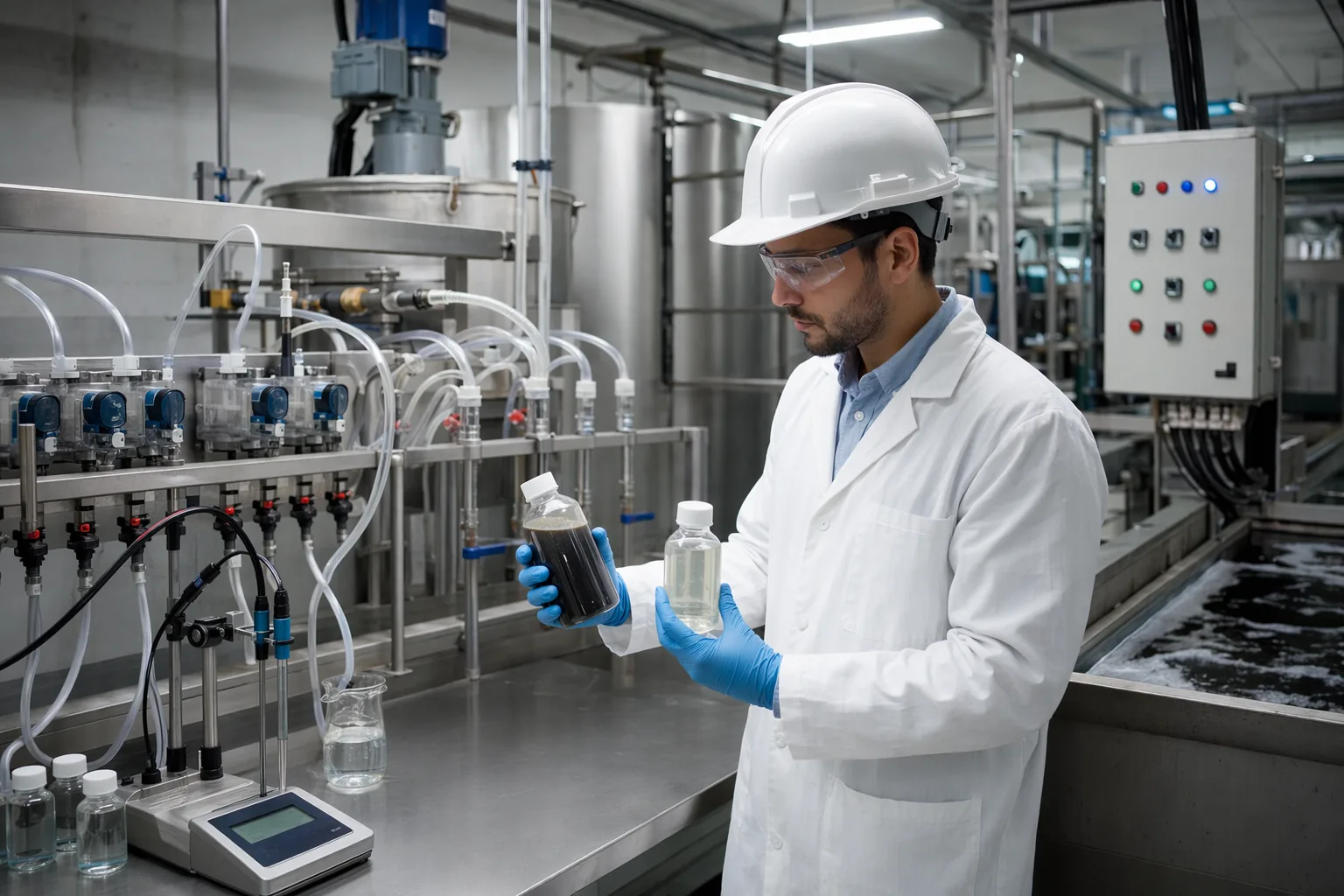
Practical formulation guidance for industrial teams evaluating laccase enzyme in dye, phenolic, lignin-rich, and mixed wastewater streams.
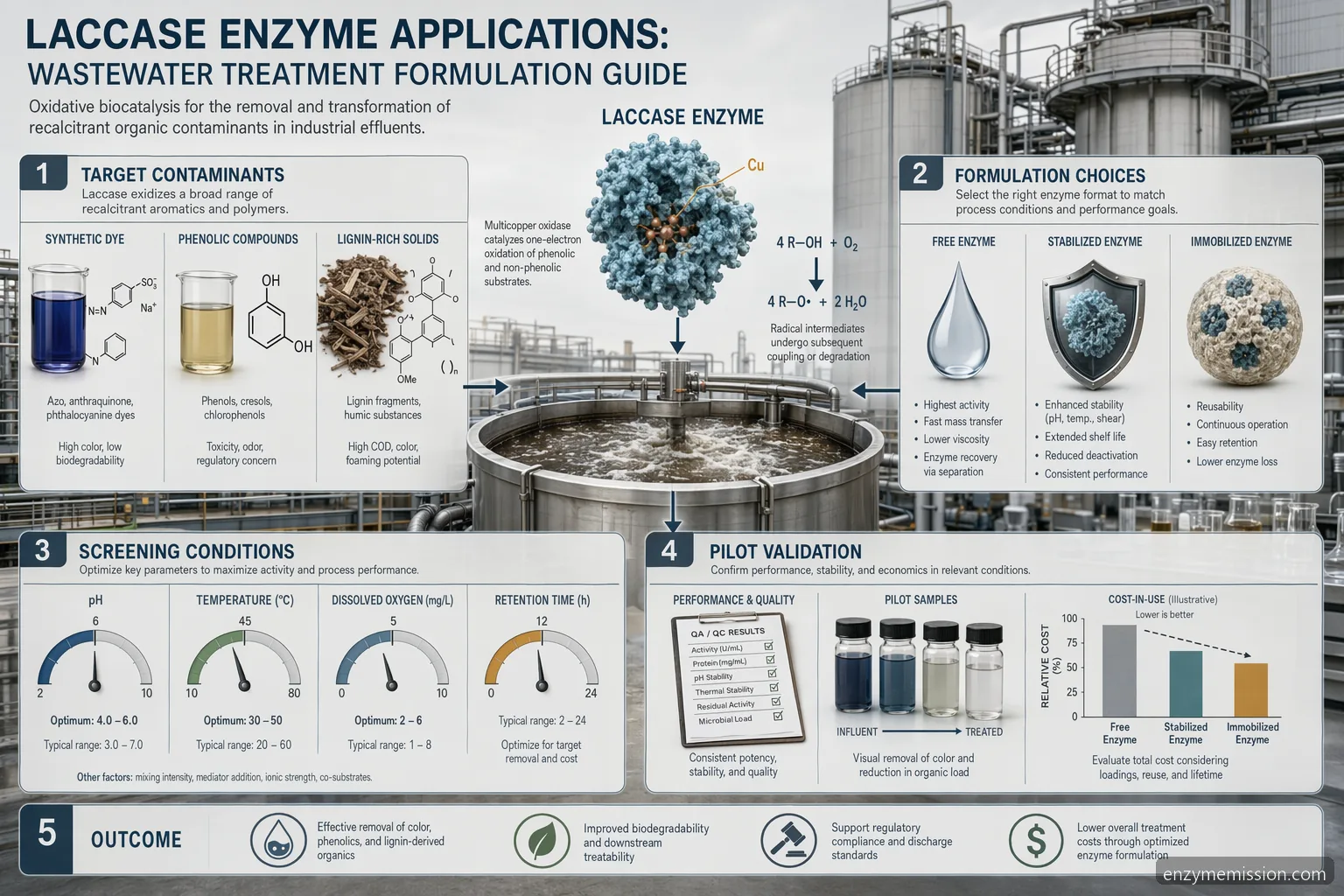
Why laccase fits industrial wastewater formulation
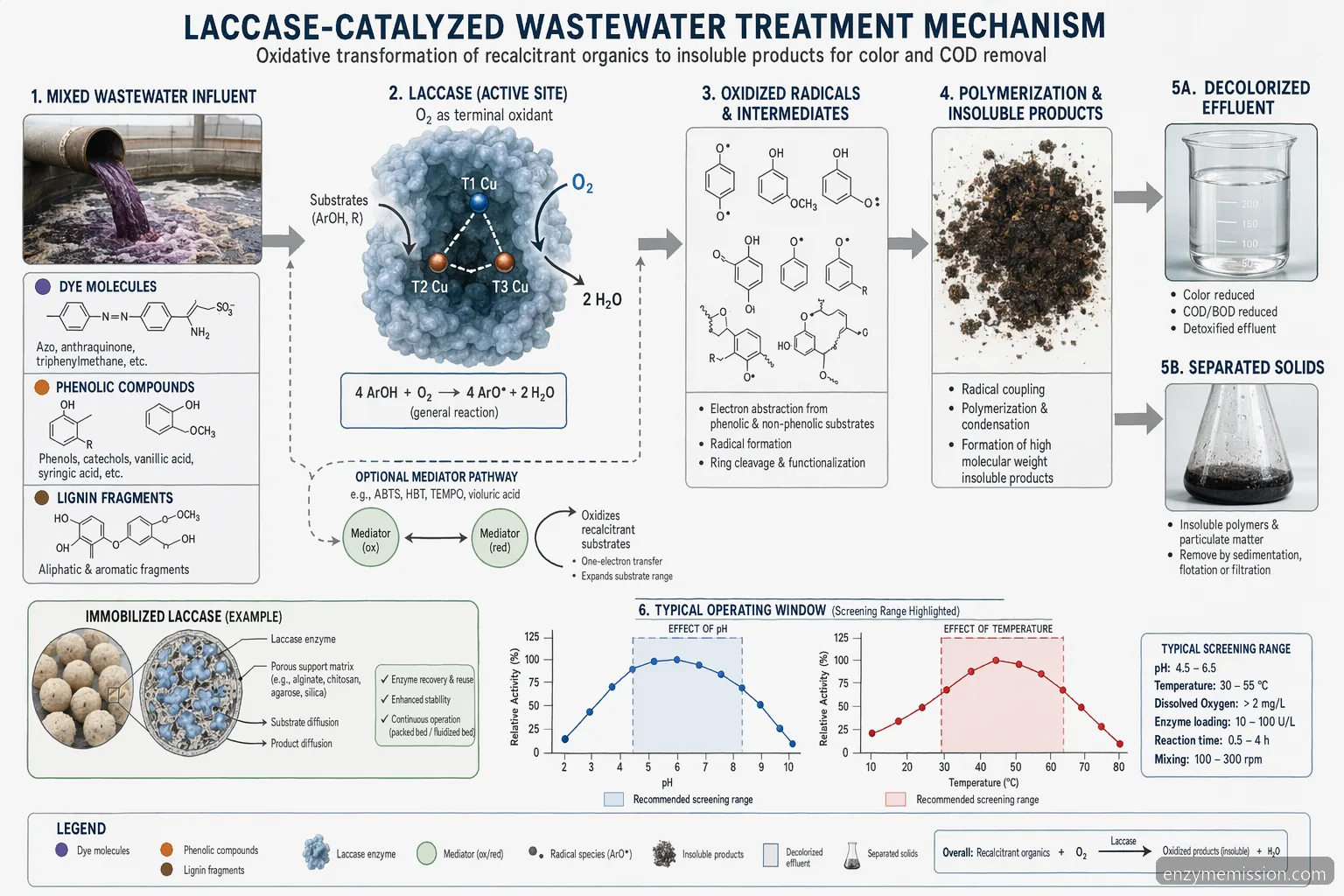
Laccase is an oxidoreductase enzyme used to catalyze oxidation of phenolic and related compounds using oxygen as the terminal electron acceptor. In wastewater treatment, formulators evaluate laccase enzyme function for color reduction, phenolic load management, lignin-derived contaminant transformation, and polishing of difficult organic fractions. This makes laccase wastewater programs relevant to textile dye effluent, pulp and paper condensates, resin and adhesive wastewater, fermentation side streams, and bioremediation projects where biological treatment alone is insufficient. The phrase “laccase old enzyme with new applications” is common because the enzyme has been studied for decades, yet formulation methods, immobilization, and process integration continue to expand its industrial use. For B2B buyers, the goal is not a generic enzyme claim; it is a validated treatment step that improves a defined parameter under plant conditions.
Primary targets: phenolics, dyes, lignin fragments, and selected aromatic compounds • Common sectors: textile, pulp and paper, chemical processing, and environmental services • Typical role: pretreatment, side-stream polishing, or tertiary treatment support
Starting process conditions for screening
Begin with bench screening before committing to bulk purchasing. Many fungal laccase products show useful activity in mildly acidic to near-neutral systems, often around pH 4.0-7.0, with temperature screening from 20-45°C. Some formulations tolerate broader conditions, but the supplier’s TDS and activity profile should guide the first test matrix. A practical initial dosage band is 10-200 U/L for clarified wastewater, increasing to 50-500 U/L when color, phenolics, or suspended solids are high. Contact time is commonly screened from 30 minutes to 6 hours. Aeration, dissolved oxygen, mixing, and solids loading can materially change results. If a mediator is considered, evaluate residual toxicity, cost, worker handling, and discharge compatibility before pilot use.
Screen pH: 4.0-7.0 unless supplier data supports otherwise • Screen temperature: 20-45°C for most aqueous treatment trials • Screen contact time: 0.5-6 hours • Track dissolved oxygen, ORP, COD, color, phenolics, and residual activity
Formulation choices: free, stabilized, or immobilized enzyme
A liquid laccase enzyme may be easiest for dosing into equalization tanks, reactors, or polishing loops, while dry formats can reduce freight weight and extend storage options when humidity is controlled. Stabilizers, buffers, and carriers should be selected for compatibility with the wastewater matrix and downstream treatment. Immobilized laccase can improve reuse and residence-time control, but it adds capital cost, pressure-drop considerations, and cleaning requirements. For laccase lignin and pulp-related effluent, suspended solids and extractives may foul carriers, so filtration or side-stream treatment may be needed. Formulators comparing the production and industrial applications of laccase enzyme should request activity definitions, recommended dilution water, shelf-life data, and handling limits. A formulation is successful only when activity remains available at the point of reaction, not just at delivery.
Liquid enzyme: simple metering and fast dispersion • Powder enzyme: storage and freight advantages when handled correctly • Immobilized enzyme: possible reuse, but requires fouling and cleaning studies
Quality documents and supplier qualification
Industrial enzyme buyers should qualify laccase suppliers with documents and samples before a commercial order. Request a COA for each batch, a TDS with activity method and recommended operating conditions, and an SDS covering storage, handling, PPE, and spill response. The COA should identify enzyme activity units, test method, manufacturing lot, appearance, pH if relevant, and any agreed microbiological or impurity checks. Because laccase enzyme price is only meaningful against activity and performance, compare suppliers on delivered activity, dose-response curve, lead time, packaging, technical support, and batch-to-batch variability. Avoid relying on a laccase enzyme applications PPT as proof of suitability; use it only as an introduction. Supplier qualification should include retained samples, incoming QC, and change-notification expectations.
Request COA, TDS, SDS, sample size, and storage guidance • Confirm activity method and unit definition before price comparison • Set incoming QC checks for appearance, activity, pH, and contamination risk • Ask how process or formulation changes are communicated
Pilot validation and cost-in-use
Pilot validation translates laboratory promise into plant economics. Run the laccase enzyme under representative flow, temperature, pH, contaminant variation, and hydraulic retention time. Compare treated and untreated controls for color, COD, BOD/COD ratio, phenolics, toxicity indicators if applicable, and compatibility with biological treatment or final polishing. Cost-in-use should include enzyme dose, dilution, buffer or pH correction, mediator cost if used, mixing energy, aeration, tank time, sludge impact, labor, and disposal outcomes. A lower laccase enzyme price may not reduce cost if more units are required or performance is inconsistent. For fungal laccase, a versatile enzyme for biotechnological applications, the best business case is built on reproducible data, not literature assumptions. Confirm success criteria before pilot start.
Use side-by-side controls and representative wastewater variability • Calculate cost per cubic meter treated, not only cost per kilogram • Include pH adjustment, aeration, mediator, and downstream effects • Define pass/fail metrics before the pilot trial
Technical Buying Checklist
Buyer Questions
Laccase enzyme applications in wastewater focus on oxidation of phenolics, textile dyes, lignin-derived compounds, and selected aromatic contaminants. It is commonly evaluated for color reduction, effluent polishing, bioremediation, and pretreatment before biological or adsorption steps. Performance depends strongly on pH, temperature, dissolved oxygen, wastewater composition, and contact time, so bench screening and pilot validation are required before full-scale adoption.
A practical bench starting range is often 10-200 U/L for clarified wastewater and 50-500 U/L for more difficult streams with high color, phenolics, or suspended solids. The correct dose depends on activity method, target contaminant, retention time, and process conditions. Always compare dose-response data using the same activity unit and include untreated controls to avoid overestimating enzyme impact.
Many laccase formulations are first screened at pH 4.0-7.0 and 20-45°C, but the best window varies by enzyme source and formulation. Review the supplier TDS for the activity profile and stability data. If plant wastewater is alkaline or hot, test actual conditions rather than relying on generic laccase enzyme structure or literature data.
Mediators can expand the range of compounds transformed by laccase, but they add cost, handling requirements, and possible discharge concerns. For industrial wastewater, first test laccase without a mediator, then compare mediator-assisted performance only if the treatment goal is not met. Any mediator should be assessed for residual toxicity, regulatory compatibility, downstream biological effects, and total cost-in-use.
Compare suppliers using COA, TDS, SDS, activity method, batch consistency, technical support, lead time, and pilot performance. Do not compare only laccase enzyme price per kilogram, because water content and activity units can differ. The most relevant metric is cost per cubic meter treated at the required effluent quality, including pH adjustment, aeration, contact time, and downstream effects.
Related Search Themes
laccase enzyme, production and industrial applications of laccase enzyme, laccase old enzyme with new applications, laccase enzyme applications ppt, fungal laccase a versatile enzyme for biotechnological applications, laccase enzyme structure
Laccase for Research & Industry
Need Laccase for your lab or production process?
ISO 9001 certified · Food-grade & research-grade · Ships to 80+ countries
Frequently Asked Questions
What are the main laccase enzyme applications in wastewater treatment?
Laccase enzyme applications in wastewater focus on oxidation of phenolics, textile dyes, lignin-derived compounds, and selected aromatic contaminants. It is commonly evaluated for color reduction, effluent polishing, bioremediation, and pretreatment before biological or adsorption steps. Performance depends strongly on pH, temperature, dissolved oxygen, wastewater composition, and contact time, so bench screening and pilot validation are required before full-scale adoption.
How should we choose a starting laccase enzyme dose?
A practical bench starting range is often 10-200 U/L for clarified wastewater and 50-500 U/L for more difficult streams with high color, phenolics, or suspended solids. The correct dose depends on activity method, target contaminant, retention time, and process conditions. Always compare dose-response data using the same activity unit and include untreated controls to avoid overestimating enzyme impact.
What pH and temperature work best for laccase wastewater treatment?
Many laccase formulations are first screened at pH 4.0-7.0 and 20-45°C, but the best window varies by enzyme source and formulation. Review the supplier TDS for the activity profile and stability data. If plant wastewater is alkaline or hot, test actual conditions rather than relying on generic laccase enzyme structure or literature data.
Do we need mediators with laccase enzyme?
Mediators can expand the range of compounds transformed by laccase, but they add cost, handling requirements, and possible discharge concerns. For industrial wastewater, first test laccase without a mediator, then compare mediator-assisted performance only if the treatment goal is not met. Any mediator should be assessed for residual toxicity, regulatory compatibility, downstream biological effects, and total cost-in-use.
How do we compare laccase enzyme suppliers?
Compare suppliers using COA, TDS, SDS, activity method, batch consistency, technical support, lead time, and pilot performance. Do not compare only laccase enzyme price per kilogram, because water content and activity units can differ. The most relevant metric is cost per cubic meter treated at the required effluent quality, including pH adjustment, aeration, contact time, and downstream effects.
Related: Laccase for Industrial Oxidation Jobs
Turn This Guide Into a Supplier Brief Request a laccase sample, COA/TDS/SDS review, and pilot formulation support for your wastewater stream. See our application page for Laccase for Industrial Oxidation Jobs at /applications/laccase-enzyme-price-india/ for specs, MOQ, and a free 50 g sample.
Contact Us to Contribute