Laccase Enzyme in Textile Industry: Dosage, pH, and Temperature Troubleshooting
Troubleshoot laccase enzyme use in textile processing: dosage, pH, temperature, assays, QC checks, cost-in-use, and supplier qualification.
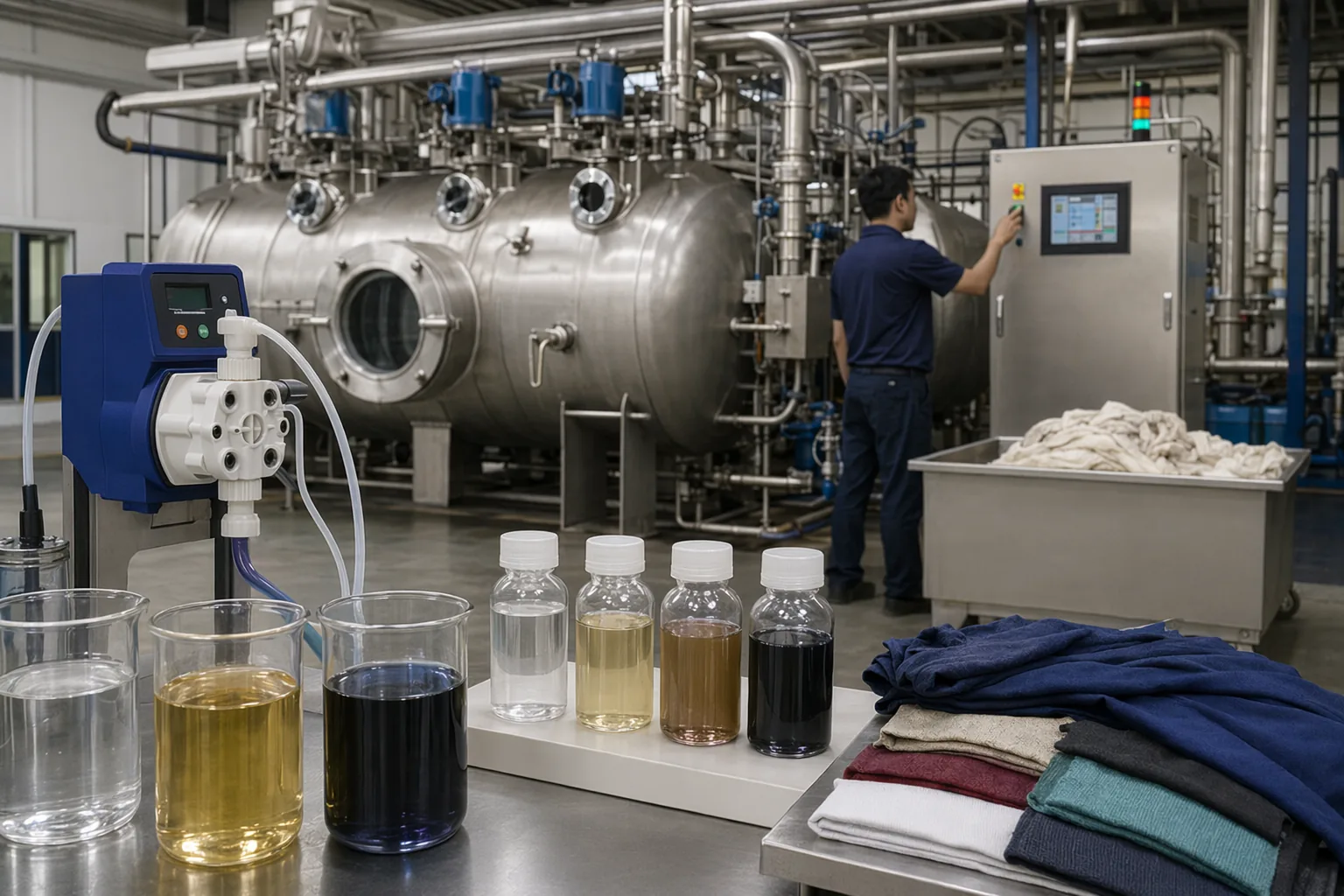
A practical B2B guide for textile mills evaluating laccase enzyme performance, bath conditions, QC controls, and supplier documentation before scale-up.
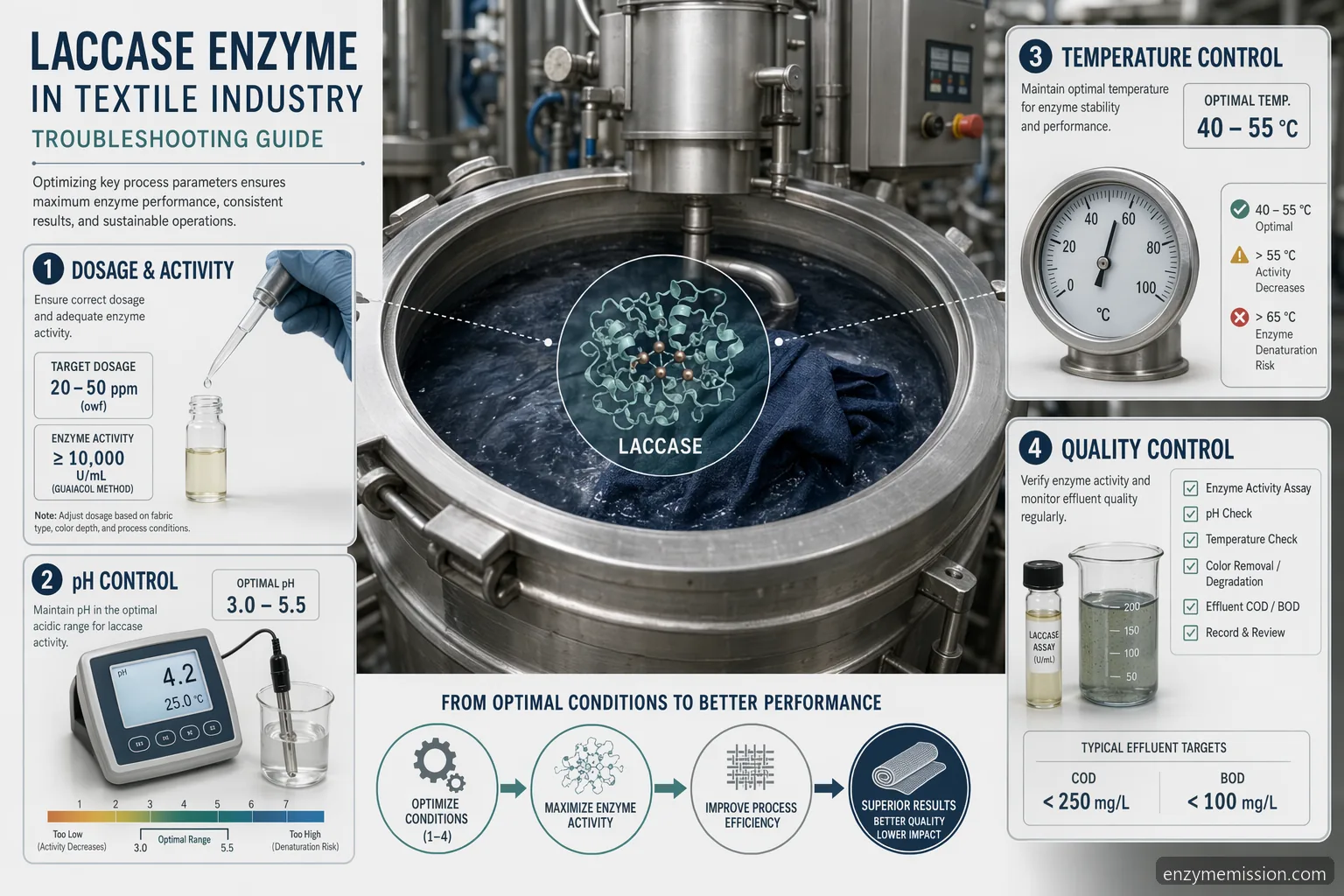
Where Laccase Fits in Textile Processing
Laccase enzyme in textile industry applications is typically used where controlled oxidation can replace or reduce harsher chemical steps. In denim and garment processing, laccase may support indigo backstaining control, shade adjustment, or bio-finishing when matched with the correct process window. In textile wastewater, laccase can help oxidize selected dye structures and phenolic compounds, but results depend strongly on dye chemistry, salts, surfactants, and residual auxiliaries. The same enzyme family is also studied for laccase lignin modification, pulp bleaching, and bioremediation, so buyers should confirm that the offered grade is designed for textile conditions rather than assuming all laccases behave alike. Unlike laccase enzyme in food industry applications, textile use often involves higher ionic load, dye mixtures, and variable effluent matrices. Practical selection starts with the target textile problem, not only the enzyme name.
Common targets: denim wash-down, backstaining control, dye oxidation, and effluent polishing. • Confirm compatibility with dyes, auxiliaries, salts, detergents, and softeners. • Do not transfer dosage directly from food, pulp, or lab literature without pilot validation. • Separate fabric-processing trials from wastewater-treatment trials because the matrices differ.
Troubleshooting Dosage, pH, and Temperature
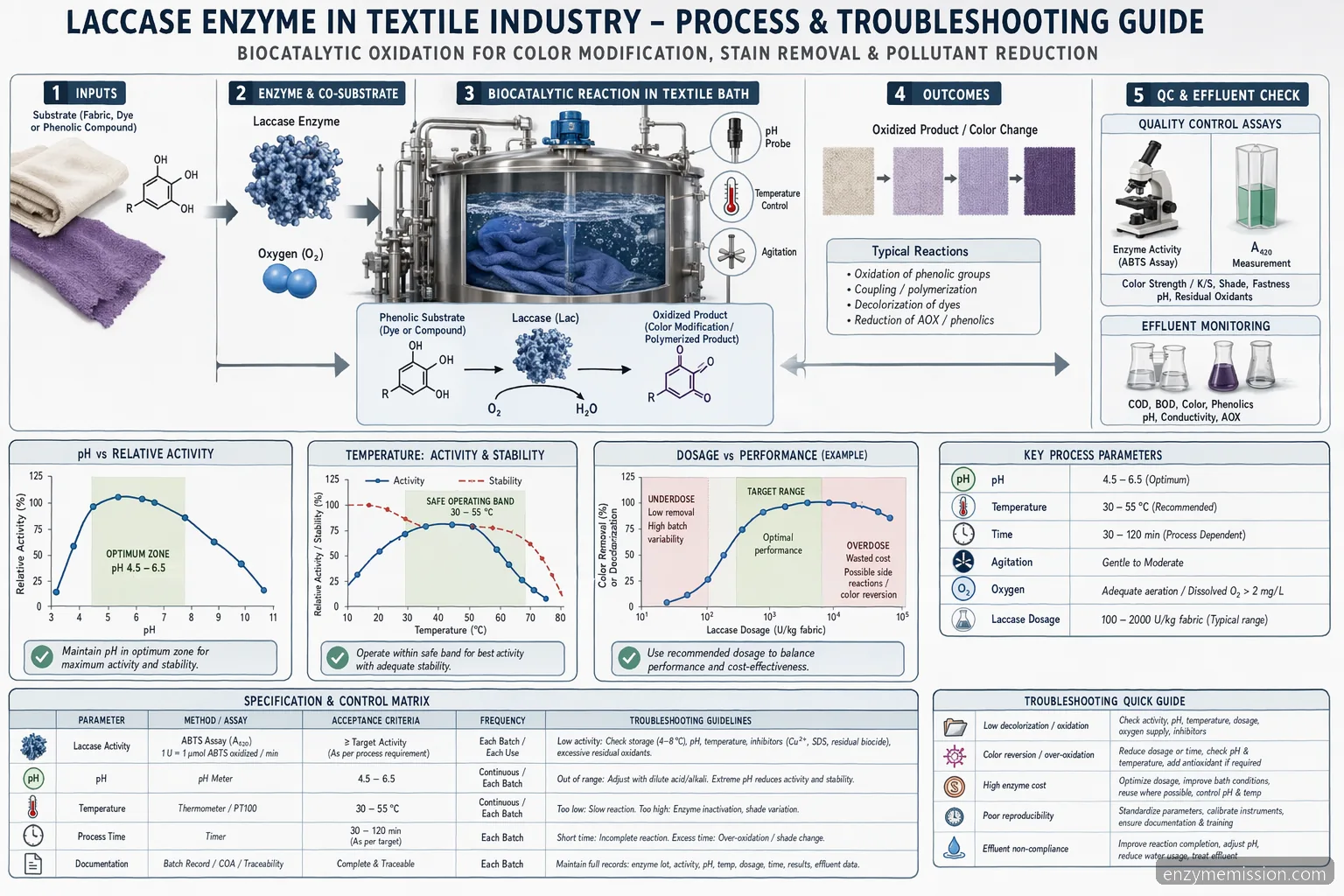
When laccase enzyme function appears weak, the first checks should be dosage, pH, temperature, contact time, and oxygen availability. For many acidic fungal laccase products, initial textile trials often begin around pH 4.0–5.5 and 40–60°C, with contact times of 20–60 minutes. Some engineered or bacterial-derived grades may tolerate more neutral pH, so the supplier’s TDS should override generic ranges. As a safe screening band, mills may compare several enzyme levels such as 0.1–1.0% owg for garment work or a supplier-recommended g/L range for bath treatment, then narrow the dosage by shade result and cost-in-use. Avoid increasing dosage before confirming that the bath pH is stable, temperature is not denaturing the enzyme, and oxidizing chemicals are not inactivating it. Rinse water carryover, peroxide residue, and extreme alkalinity are frequent root causes of poor laccase enzyme activity.
Check actual bath pH at operating temperature, not only make-up water pH. • Remove or neutralize peroxide and strong oxidants before enzyme addition. • Run a no-enzyme blank and a standard enzyme control in every pilot set. • Optimize liquor ratio and agitation to improve fabric contact and oxygen transfer.
Activity Assay and QC Checks Before Scale-Up
A reliable laccase enzyme assay is essential because activity values are not always comparable between suppliers. Laccase enzyme activity assay methods may use ABTS, guaiacol, syringaldazine, or another substrate, each producing different unit definitions and sensitivity. For procurement, request the COA showing activity, assay substrate, pH, temperature, lot number, appearance, storage guidance, and expiry or retest date. For production QC, mills should keep a retained standard lot and run side-by-side activity or application tests when changing batches. If the lab assay shows acceptable activity but the plant result fails, investigate bath contamination, dye chemistry, chelants, pH drift, or thermal exposure during storage. If the plant result succeeds but the lab assay varies, harmonize the method with the supplier before making rejection decisions. The goal is not a single high activity number; it is reproducible textile performance under mill conditions.
Record assay substrate, wavelength, pH, temperature, reaction time, and unit definition. • Compare incoming lots against a retained production-approved reference sample. • Store enzyme according to SDS and TDS instructions to reduce activity loss. • Use application testing as the final release criterion for critical textile shades.
Wastewater, Lignin, and Effluent Considerations
For laccase wastewater treatment, the challenge is less about enzyme activity alone and more about the complete effluent matrix. Textile wastewater can contain reactive dyes, vat dye residues, salts, alkali, surfactants, sizing agents, dispersants, and metal ions that may inhibit or redirect oxidation. Laccase may help reduce color for selected streams, especially when phenolic or easily oxidized structures are present, but it should be piloted with real composite and segregated effluent samples. Mediator-assisted systems can broaden oxidation potential, yet mediators add cost, regulatory review, and downstream control requirements. Mills comparing laccase lignin, pulp bleaching, or bioremediation references should remember that those matrices may have different pH, solids, and contaminants than textile effluent. A practical wastewater pilot should measure color removal, COD trend, sludge impact, toxicity screening where required, and compatibility with biological treatment before procurement is finalized.
Test real effluent, not only synthetic dye solutions. • Measure color, COD, pH, conductivity, residual peroxide, and treatment compatibility. • Review mediator use for cost, handling, and discharge implications. • Assess whether laccase is best used before, after, or within existing treatment steps.
How B2B Buyers Should Compare Suppliers
Laccase enzyme price should be evaluated as delivered cost-in-use, not simply invoice price per kilogram. A lower-priced product can be expensive if it requires higher dosage, longer processing time, tighter pH correction, more rework, or higher shade variation. Before purchase, request the TDS, SDS, COA, recommended dosage band, storage conditions, packaging options, shelf-life statement, and technical support process. Supplier qualification should include sample consistency, lot traceability, response time, documentation quality, and willingness to support pilot validation at realistic liquor ratios and equipment conditions. For imported or contract-manufactured materials, confirm lead time, minimum order quantity, and change-notification practices. Buyers should also ask whether the enzyme is formulated as liquid, powder, or granulate, because handling, dust control, pumpability, and storage stability affect textile operations. The best supplier helps translate enzyme activity into stable mill performance.
Compare cost per treated kilogram of fabric or cubic meter of effluent. • Require COA, TDS, and SDS before scale-up or tender approval. • Validate packaging, storage temperature, and handling requirements with EHS teams. • Include pilot data and change-control expectations in supplier qualification.
Technical Buying Checklist
Buyer Questions
Many acidic fungal laccase enzyme products perform well in textile trials around pH 4.0–5.5, but this is not universal. Some specialty grades may work closer to neutral pH. Always start with the supplier’s TDS, then verify with your process water, dyes, auxiliaries, and fabric. Plant pH should be checked during the run because carryover alkali can quickly reduce laccase enzyme activity.
Do not select dosage only from a literature value. Start with the supplier’s recommended band, then run a matrix covering dosage, pH, temperature, and contact time. For garment applications, mills often screen around 0.1–1.0% owg, while bath or wastewater work may use g/L dosing. The best dosage is the lowest level that delivers repeatable performance, acceptable shade, and favorable cost-in-use.
Common causes include pH drift, residual peroxide, high alkalinity, excessive temperature, incompatible detergents, dye variability, low oxygen transfer, or enzyme storage damage. Lab trials often use cleaner water and controlled conditions, while production baths contain carryover chemicals and fabric impurities. Use a no-enzyme blank, a reference enzyme lot, and the same process water to identify whether the issue is enzyme quality or process interference.
Request the COA, TDS, and SDS before pilot or purchase approval. The COA should identify lot number, activity, assay method, appearance, and specification limits. The TDS should provide application guidance, pH and temperature range, storage, and dosage recommendations. The SDS supports handling, storage, and EHS review. For repeat buying, also confirm lot traceability, packaging, lead time, and change-notification practices.
Unit price matters, but textile buyers should compare cost-in-use. A higher-activity or better-formulated laccase may cost more per kilogram but require lower dosage, shorter cycles, less pH correction, or fewer reworks. Evaluate cost per kilogram of treated fabric or per cubic meter of effluent. Include performance consistency, documentation quality, supplier support, storage stability, and pilot results in the final sourcing decision.
Laccase for Research & Industry
Need Laccase for your lab or production process?
ISO 9001 certified · Food-grade & research-grade · Ships to 80+ countries
Frequently Asked Questions
What pH is best for laccase enzyme in textile industry trials?
Many acidic fungal laccase enzyme products perform well in textile trials around pH 4.0–5.5, but this is not universal. Some specialty grades may work closer to neutral pH. Always start with the supplier’s TDS, then verify with your process water, dyes, auxiliaries, and fabric. Plant pH should be checked during the run because carryover alkali can quickly reduce laccase enzyme activity.
How should a mill choose the right laccase dosage?
Do not select dosage only from a literature value. Start with the supplier’s recommended band, then run a matrix covering dosage, pH, temperature, and contact time. For garment applications, mills often screen around 0.1–1.0% owg, while bath or wastewater work may use g/L dosing. The best dosage is the lowest level that delivers repeatable performance, acceptable shade, and favorable cost-in-use.
Why does laccase work in the lab but fail in production?
Common causes include pH drift, residual peroxide, high alkalinity, excessive temperature, incompatible detergents, dye variability, low oxygen transfer, or enzyme storage damage. Lab trials often use cleaner water and controlled conditions, while production baths contain carryover chemicals and fabric impurities. Use a no-enzyme blank, a reference enzyme lot, and the same process water to identify whether the issue is enzyme quality or process interference.
What documents should buyers request from a laccase enzyme supplier?
Request the COA, TDS, and SDS before pilot or purchase approval. The COA should identify lot number, activity, assay method, appearance, and specification limits. The TDS should provide application guidance, pH and temperature range, storage, and dosage recommendations. The SDS supports handling, storage, and EHS review. For repeat buying, also confirm lot traceability, packaging, lead time, and change-notification practices.
Is laccase enzyme price the main factor in supplier selection?
Unit price matters, but textile buyers should compare cost-in-use. A higher-activity or better-formulated laccase may cost more per kilogram but require lower dosage, shorter cycles, less pH correction, or fewer reworks. Evaluate cost per kilogram of treated fabric or per cubic meter of effluent. Include performance consistency, documentation quality, supplier support, storage stability, and pilot results in the final sourcing decision.
Related: Laccase for Industrial Oxidation Jobs
Turn This Guide Into a Supplier Brief Request a textile laccase sample, COA, TDS, SDS, and pilot dosing guidance from EnzymeMission. See our application page for Laccase for Industrial Oxidation Jobs at /applications/laccase-enzyme-price-india/ for specs, MOQ, and a free 50 g sample.
Contact Us to Contributehello@mail.enzymemission.com