Laccase Enzyme Price for Wastewater Treatment Buyers
Compare laccase enzyme price by activity, stability, dosage, assay method, and supplier documents for industrial wastewater treatment.
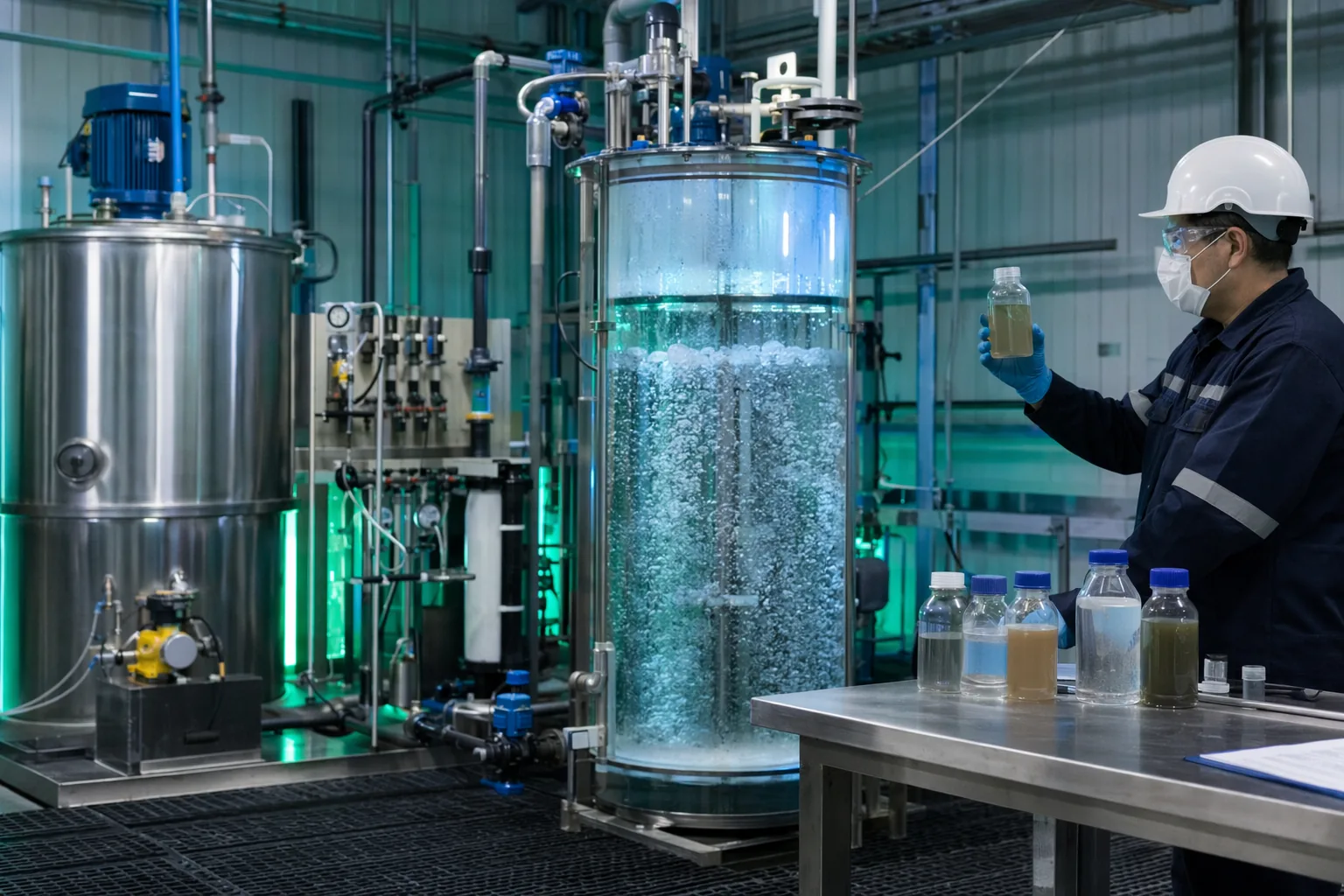
A low quoted enzyme price laccase buyers see on a spreadsheet may not be the lowest operating cost. Use this checklist to compare activity, dosage, documents, and supplier readiness before ordering.
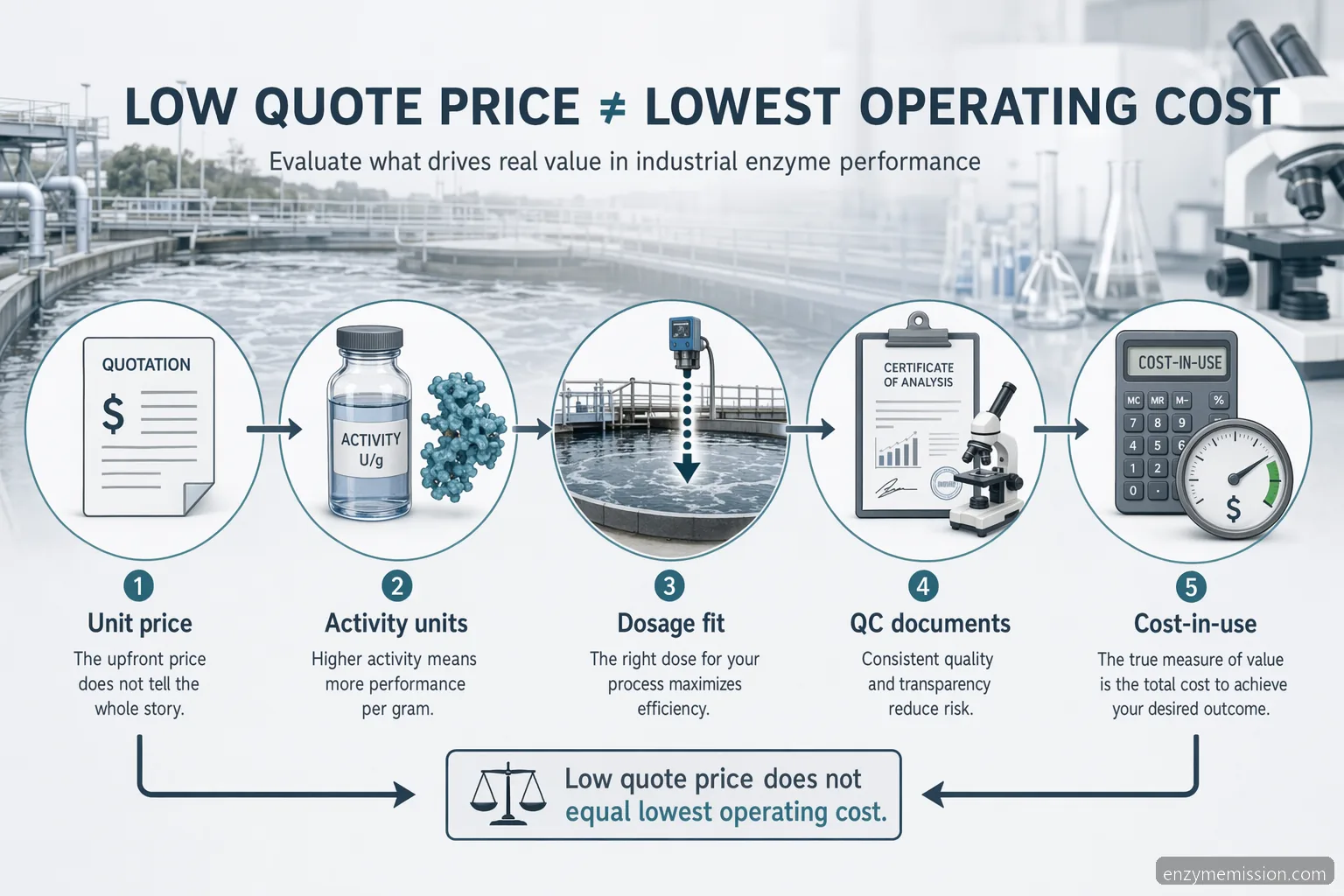
Why laccase enzyme price varies between suppliers
Laccase enzyme price changes because buyers are not always comparing the same product strength, format, or technical support. Industrial laccase may be sold as liquid or powder, with activity stated in U/g, U/mL, kU/kg, or another supplier-defined unit. The assay substrate, pH, temperature, and unit definition strongly affect the reported number, so two quotations can look similar but perform differently in wastewater. For procurement, the practical comparison is cost per treated cubic meter at an agreed removal target, not only enzyme laccase price per pack. Ask whether the offer includes batch COA, technical data sheet, safety data sheet, recommended storage, shelf-life, lead time, and support for pilot validation. A higher unit price may be justified if the enzyme retains activity under your effluent pH, temperature, salinity, and inhibitor profile.
Compare activity using the same assay basis wherever possible. • Separate product price from freight, duties, cold-chain needs, and minimum order quantity. • Check whether technical service is included for trial design and troubleshooting.
Process fit for laccase wastewater treatment
The laccase enzyme function is oxidation of suitable substrates using dissolved oxygen, commonly targeting phenolic compounds, certain dyes, lignin-derived molecules, and other oxidizable organics. In wastewater treatment, the process must be matched to real effluent chemistry. Many fungal laccases operate best around pH 3.5 to 6.5 and about 25 to 55 °C, but the usable window depends on the source, formulation, and exposure time. Typical screening dosages may begin around 50 to 1000 U/L, with contact times from 30 minutes to several hours; difficult streams may require longer residence time or immobilization. Residual chlorine, peroxide, sulfide, heavy metals, high surfactant load, and extreme pH can reduce laccase enzyme activity. For non-phenolic pollutants, a mediator system may improve oxidation but must be evaluated for cost, toxicity, compliance, and downstream impact.
Measure influent pH, COD, color, conductivity, and inhibitor risks before dosing. • Confirm oxygen availability because laccase uses molecular oxygen as the electron acceptor. • Avoid assuming laboratory decolorization equals full-scale contaminant removal.
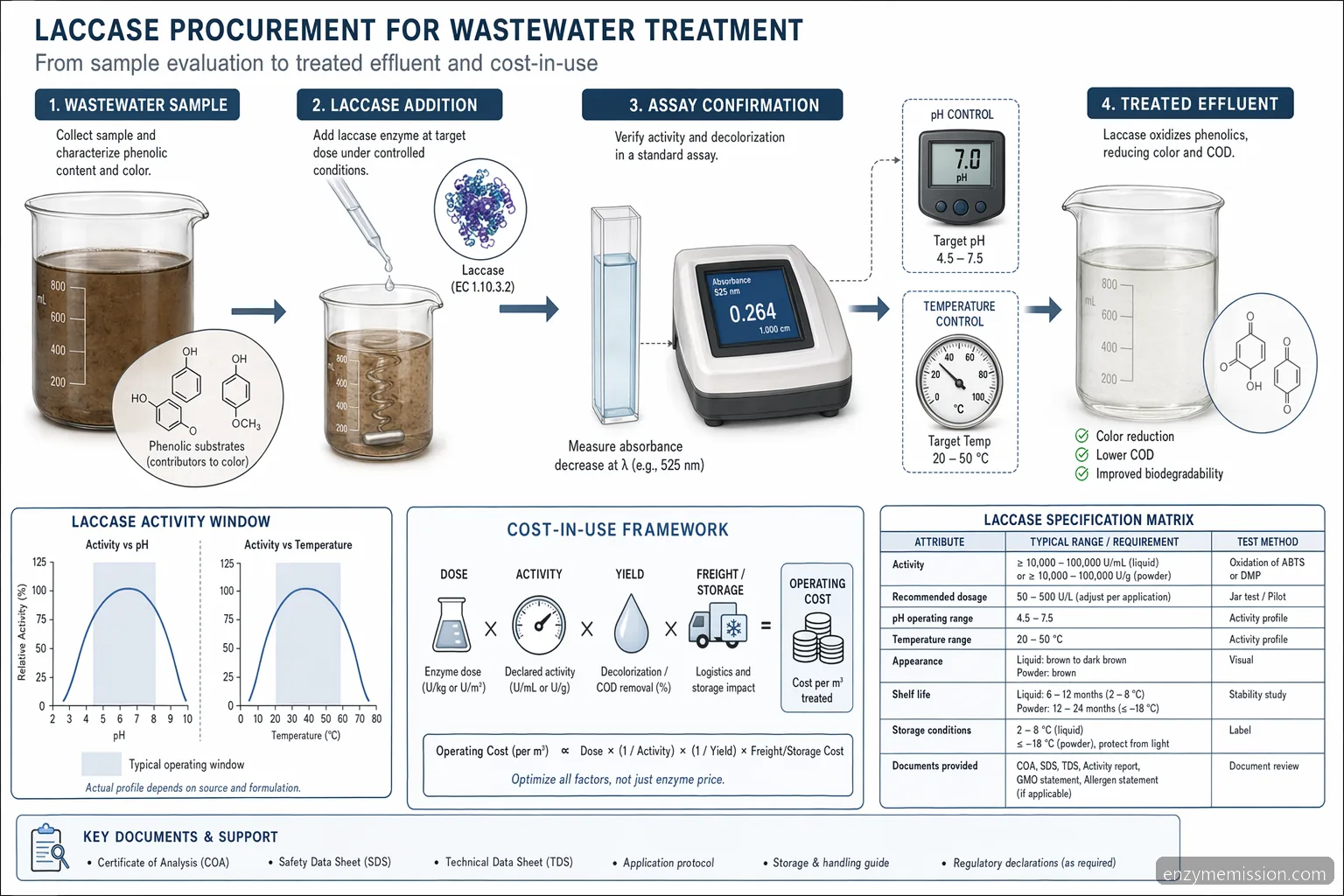
Specification checklist before comparing quotations
Before comparing laccase enzyme price in India or any import market, create a common specification sheet for all suppliers. Include the wastewater application, target pollutants, treatment stage, expected pH and temperature, hydraulic retention time, and whether the enzyme will be dosed once, continuously, or immobilized. Request laccase enzyme structure and source information at a practical level, such as fungal or bacterial origin and formulation type, without requiring proprietary strain details. The quotation should state activity, assay substrate, unit definition, carrier composition category, physical form, solubility, recommended dilution water, storage temperature, shelf-life, and packaging. For regulated sites, the SDS must be reviewed by EHS before trials. A TDS should explain handling conditions, compatible materials, and inactivation considerations so the process team can design safe bench and pilot work.
Ask for COA for the exact batch offered, not only a generic data sheet. • Confirm whether activity is guaranteed at dispatch or through shelf-life. • Define acceptance criteria before approving a purchase order.
QC checks: laccase enzyme assay and activity confirmation
A reliable laccase enzyme assay is central to fair price comparison. Common assays use substrates such as ABTS, guaiacol, catechol, or syringaldazine, but results are not interchangeable unless conditions are standardized. The COA should state substrate, buffer pH, assay temperature, wavelength, extinction coefficient or calculation basis, and unit definition. Incoming QC can include appearance, odor, pH of liquid product, moisture for powder, activity confirmation, and microbial or impurity checks if relevant to the plant. For wastewater pilots, run enzyme-only, wastewater-only, heat-inactivated enzyme, and blank controls to distinguish enzymatic oxidation from adsorption, aeration, or natural degradation. Track activity loss after dilution, storage, and contact with effluent. This prevents paying for nominal activity that is not available under your process conditions.
Use the same laccase enzyme activity assay for supplier comparison. • Retain batch samples for dispute resolution and repeat testing. • Record activity after exposure to site effluent, not only in clean buffer.
How to calculate cost-in-use for procurement
The correct comparison metric is cost-in-use: enzyme spend required to meet the treatment objective under stable operating conditions. Start with bench screening across pH, temperature, dosage, contact time, and aeration. Then run a pilot using representative daily and seasonal wastewater, because equalization tank composition can vary. Calculate cost per cubic meter from active dosage, product activity, delivered price, dilution losses, storage losses, mediator requirement, labor, equipment, and any sludge or polishing changes. Include failure risk: a cheaper product that requires double dosage, tighter pH adjustment, or more frequent shipments can be more expensive. Supplier qualification should review manufacturing consistency, batch traceability, document responsiveness, technical support, packaging integrity, lead time reliability, and change-control communication. This approach turns laccase enzyme price into an operating decision rather than a simple commodity comparison.
Set success criteria such as color reduction, phenol reduction, COD contribution, or toxicity screening. • Compare at the same target result and residence time. • Include pH correction, aeration, and mediator costs if required.
Technical Buying Checklist
Buyer Questions
Compare laccase enzyme price by cost-in-use, not simply by kilogram, liter, or quoted activity. Ask each supplier to provide the assay method, batch COA, recommended dosage range, storage conditions, and shelf-life. Then run the same wastewater trial at equal pH, temperature, contact time, and target performance. The best offer is the one that delivers repeatable treatment at the lowest verified cost per cubic meter.
Laccase enzyme price in India can vary due to activity strength, imported versus local supply, liquid or powder format, packaging size, freight, lead time, documentation quality, and technical support. Reported activity can also differ because assay conditions differ. For industrial procurement, request comparable COA and TDS documents, clarify taxes and logistics, and verify performance with a pilot before choosing the lowest quotation.
Common laccase enzyme assay methods use ABTS, guaiacol, catechol, or syringaldazine as substrates. No single assay automatically predicts wastewater performance, so the key is consistency. Request the supplier’s full method, including pH, temperature, wavelength, and unit definition. For purchase comparison, test all candidate products with the same laccase enzyme activity assay and then confirm performance in real effluent.
Bench trials should test the site’s expected pH, temperature, conductivity, pollutant range, and inhibitor profile. Many laccase products are screened around pH 3.5 to 6.5 and 25 to 55 °C, but supplier guidance and real wastewater results should decide the final window. Include dosage, aeration, contact time, mediator need, and activity retention after dilution before moving to pilot scale.
Laccase lignin activity can be relevant for pulp, paper, textile, and biomass-related effluents that contain lignin-derived phenolics or colored compounds. However, wastewater treatment performance depends on the complete matrix, not only lignin reactivity. Ask suppliers for application data, but validate with your own effluent. Measure practical outcomes such as color, phenolics, COD contribution, toxicity indicators, and downstream compatibility.
Laccase for Research & Industry
Need Laccase for your lab or production process?
ISO 9001 certified · Food-grade & research-grade · Ships to 80+ countries
Frequently Asked Questions
What is the best way to compare laccase enzyme price?
Compare laccase enzyme price by cost-in-use, not simply by kilogram, liter, or quoted activity. Ask each supplier to provide the assay method, batch COA, recommended dosage range, storage conditions, and shelf-life. Then run the same wastewater trial at equal pH, temperature, contact time, and target performance. The best offer is the one that delivers repeatable treatment at the lowest verified cost per cubic meter.
Why does laccase enzyme price in India vary so much?
Laccase enzyme price in India can vary due to activity strength, imported versus local supply, liquid or powder format, packaging size, freight, lead time, documentation quality, and technical support. Reported activity can also differ because assay conditions differ. For industrial procurement, request comparable COA and TDS documents, clarify taxes and logistics, and verify performance with a pilot before choosing the lowest quotation.
Which laccase enzyme assay should a wastewater buyer request?
Common laccase enzyme assay methods use ABTS, guaiacol, catechol, or syringaldazine as substrates. No single assay automatically predicts wastewater performance, so the key is consistency. Request the supplier’s full method, including pH, temperature, wavelength, and unit definition. For purchase comparison, test all candidate products with the same laccase enzyme activity assay and then confirm performance in real effluent.
What operating conditions should be tested before scale-up?
Bench trials should test the site’s expected pH, temperature, conductivity, pollutant range, and inhibitor profile. Many laccase products are screened around pH 3.5 to 6.5 and 25 to 55 °C, but supplier guidance and real wastewater results should decide the final window. Include dosage, aeration, contact time, mediator need, and activity retention after dilution before moving to pilot scale.
Does laccase lignin activity matter for wastewater treatment?
Laccase lignin activity can be relevant for pulp, paper, textile, and biomass-related effluents that contain lignin-derived phenolics or colored compounds. However, wastewater treatment performance depends on the complete matrix, not only lignin reactivity. Ask suppliers for application data, but validate with your own effluent. Measure practical outcomes such as color, phenolics, COD contribution, toxicity indicators, and downstream compatibility.
Related: Laccase for Industrial Oxidation Jobs
Turn This Guide Into a Supplier Brief Request a laccase wastewater trial checklist, COA/TDS/SDS review, and cost-in-use comparison from Enzyme Mission. See our application page for Laccase for Industrial Oxidation Jobs at /applications/laccase-enzyme-price-india/ for specs, MOQ, and a free 50 g sample.
Contact Us to Contribute