Laccase Enzyme Applications PPT: Dosage, pH, and Temperature in Wastewater Treatment
Troubleshoot laccase dosage, pH, temperature, and cost-in-use for industrial wastewater treatment with B2B buyer QC guidance.
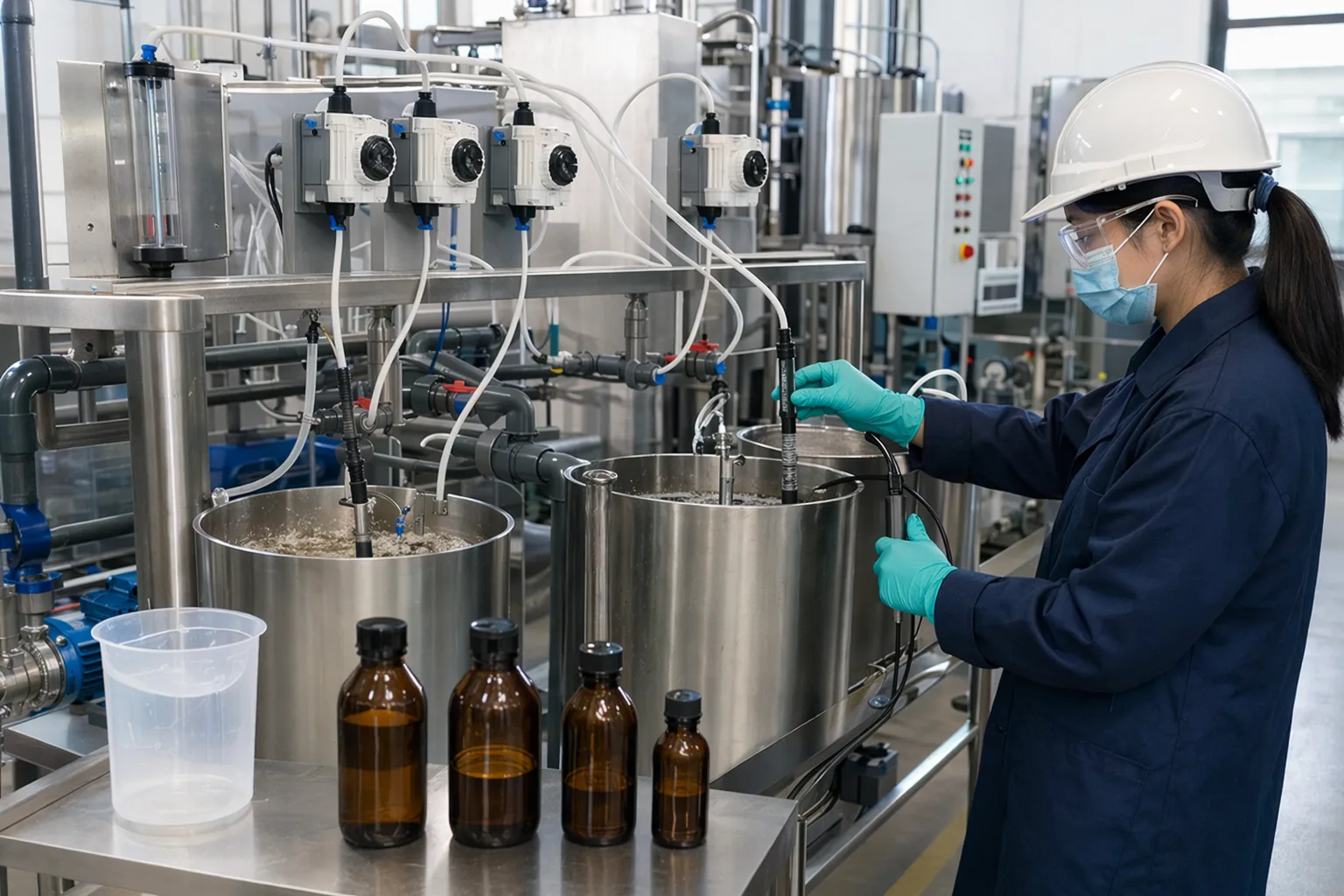
A practical buyer and process-engineering guide for evaluating laccase enzyme performance in industrial wastewater treatment, including operating windows, pilot validation, QC documents, and supplier qualification.
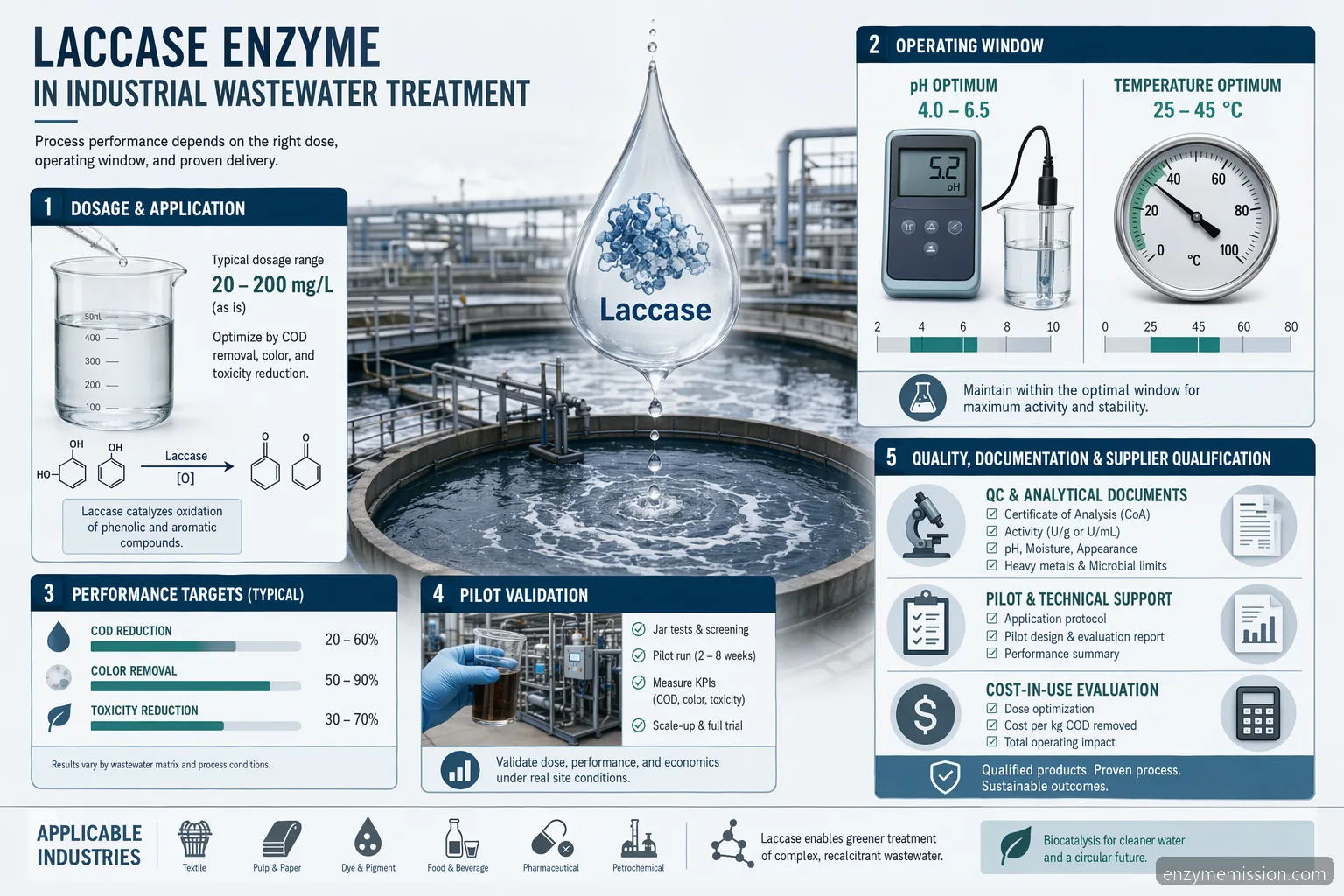
Why buyers search for laccase enzyme applications ppt
Teams searching for "laccase enzyme applications ppt" are usually preparing an internal technical review, troubleshooting an underperforming trial, or comparing enzyme routes with chemical oxidation. In wastewater treatment, laccase is valued because it can oxidize phenolic compounds, dyes, lignin-derived molecules, and selected recalcitrant organics under comparatively mild conditions. However, the enzyme is not a universal treatment chemical. Performance depends on wastewater composition, inhibitors, pH, temperature, oxygen transfer, and whether a mediator is used. For B2B procurement, the goal is to connect laboratory performance with plant operating reality: dosing pump compatibility, retention time, tank mixing, sludge impact, and downstream compliance targets. A useful presentation should therefore include process conditions, analytical methods, safety handling, and cost-in-use assumptions rather than only listing laccase enzyme applications.
Best fit: phenolic, dye, pulp, textile, and lignin-containing streams • Key risk: activity loss from unsuitable pH, heat, metals, or oxidants • Buyer focus: repeatable removal efficiency and predictable operating cost
Laccase enzyme function and structure in wastewater
The laccase enzyme function is oxidative catalysis. Laccase is a multicopper oxidase that uses molecular oxygen as the final electron acceptor and reduces oxygen to water while oxidizing suitable substrates. This laccase enzyme structure is important for troubleshooting because copper centers support electron transfer, while the protein environment affects pH tolerance, temperature stability, and substrate range. Fungal laccase is often described as a versatile enzyme for biotechnological applications because many fungal sources produce extracellular laccases with useful activity toward phenols, aromatic amines, dyes, and lignin fragments. In industrial wastewater, the enzyme may polymerize soluble phenolics into less soluble products, break chromophores, or support partial transformation before biological or physical treatment. Results vary by matrix, so activity units from a COA should be interpreted together with application testing, not as a stand-alone guarantee of plant performance.
Requires dissolved oxygen for catalytic turnover • May need mediator chemistry for less reactive contaminants • Activity unit method should match supplier documentation
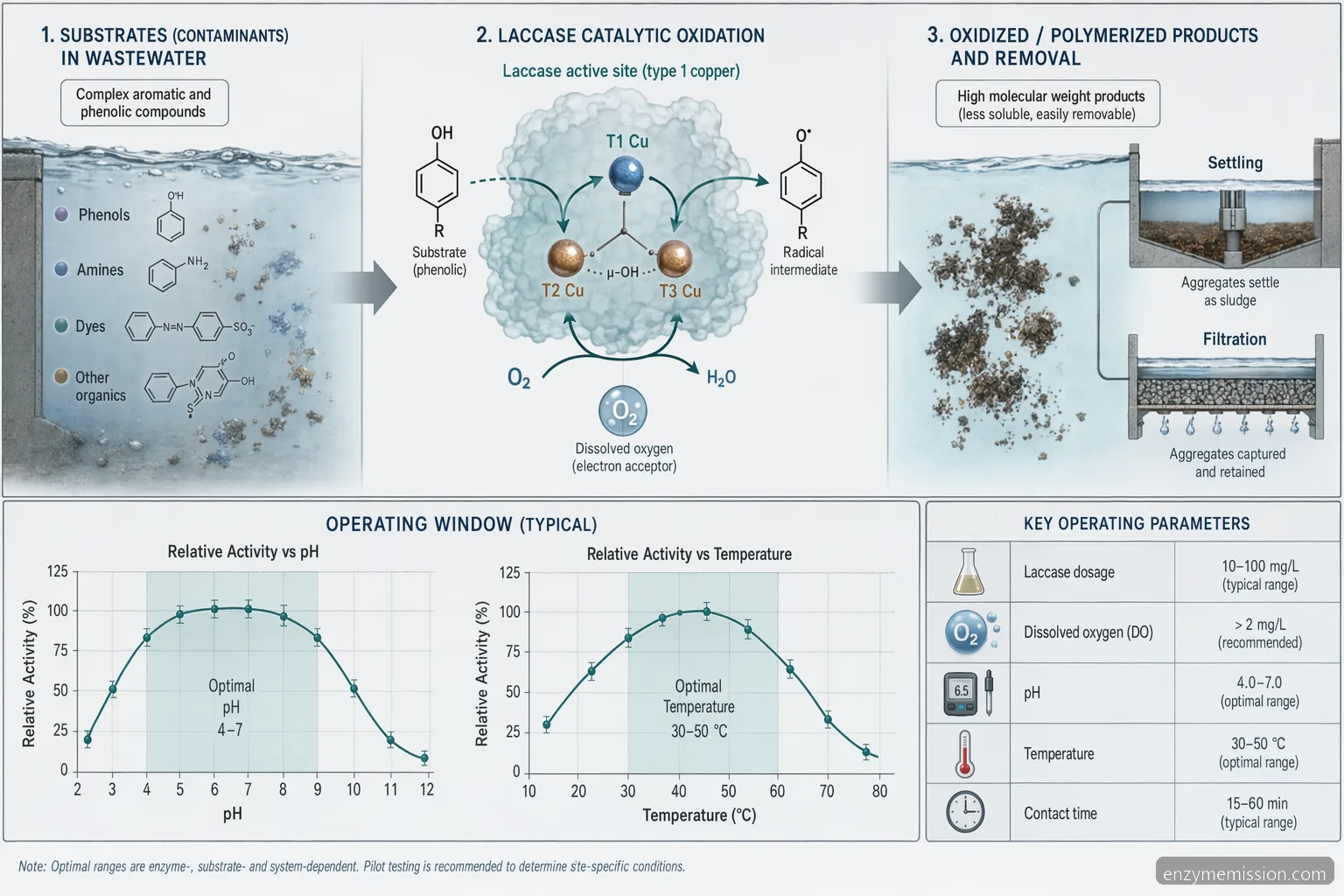
Dosage, pH, and temperature starting points
For screening, many industrial teams begin laccase wastewater trials at 50-500 U/L in the reaction liquor or at an equivalent dose based on supplier activity and wastewater load. Some concentrated applications may test higher bands, while polishing steps may require less. Typical pH screening should include pH 4.0-7.0, with many fungal laccases showing stronger activity in mildly acidic conditions, although neutral-tolerant products may be available. Temperature screening commonly covers 25-55°C; higher temperatures may increase reaction rate but can reduce enzyme half-life. A robust trial matrix changes one variable at a time: dosage, pH, temperature, contact time, oxygenation, and mediator level. Track color, UV absorbance, phenolics, COD, BOD/COD ratio, toxicity, turbidity, and sludge formation. The optimal condition is not always maximum removal; it is the lowest stable dose that meets discharge or pretreatment targets.
Initial dose: 50-500 U/L, then refine by response curve • Initial pH screen: 4.0-7.0 unless supplier TDS states otherwise • Initial temperature screen: 25-55°C with stability checks • Contact time: commonly 30 minutes to 24 hours depending on target
Troubleshooting poor laccase wastewater performance
When laccase does not meet removal targets, first confirm that the enzyme is active in a clean control assay and has been stored according to the TDS. Then compare activity in real wastewater, because surfactants, residual peroxide, chlorine, sulfides, high salinity, heavy metals, extreme pH, and high suspended solids can suppress performance. Oxygen transfer is another common bottleneck; laccase needs oxygen, so closed or poorly mixed tanks may underperform. If the contaminant has a high redox potential, a mediator may improve transformation, but mediator cost, safety, residuals, and regulatory acceptance must be assessed. Also check whether the measured endpoint matches the reaction: color removal may improve while COD changes modestly, or phenolics may polymerize and require clarification. Troubleshooting should combine enzyme analytics, jar tests, and process data rather than simply increasing dose.
Check incoming wastewater variability by shift, batch, and season • Verify no residual oxidants are deactivating the enzyme • Confirm mixing and oxygen availability before raising dosage • Measure by application endpoints, not only enzyme activity units
Supplier qualification and cost-in-use evaluation
For production and industrial applications of laccase enzyme, procurement should qualify both the product and the supplier. Request a current COA for lot-specific activity, a TDS for recommended handling and operating ranges, and an SDS for safe storage, PPE, and spill response. Ask how activity is measured, what substrate and pH are used, what preservatives are present, and how long activity remains stable under your storage conditions. Laccase enzyme price should be converted into cost-in-use by including dose, activity concentration, dilution losses, mediator consumption, retention time, energy for pH or temperature adjustment, sludge handling, and compliance value. Before purchase commitment, run pilot validation using representative wastewater, realistic hydraulics, and downstream unit operations. Laccase is an old enzyme with new applications, but industrial adoption depends on repeatability, documentation, and economics.
Required documents: COA, TDS, SDS, activity method, shelf-life data • Compare lots for consistency before long-term supply • Pilot at realistic pH, temperature, mixing, and residence time • Use total treatment cost instead of unit price alone
Technical Buying Checklist
Buyer Questions
Common laccase enzyme applications include color reduction in dye-containing wastewater, oxidation of phenolic compounds, transformation of lignin-derived organics, and pretreatment before biological or physical separation. It is also evaluated in pulp, textile, specialty chemical, and bioremediation workflows. Suitability depends on wastewater composition, target limits, pH, temperature, oxygen transfer, and whether reaction products can be removed downstream.
Start with a lab response curve rather than a single dose. A practical first screen is often 50-500 U/L in the reaction liquor, adjusted for supplier activity and wastewater strength. Include untreated controls, heat-inactivated enzyme controls, and multiple contact times. The best dosage is the lowest level that consistently meets the target endpoint under realistic pH, temperature, and mixing conditions.
Real wastewater may contain inhibitors that are absent from clean lab assays, such as residual chlorine, peroxide, sulfides, heavy metals, high salts, surfactants, or extreme pH. Suspended solids can also interfere with contact between enzyme and substrate. Confirm enzyme activity with a clean control, then test filtered and unfiltered wastewater, oxygen availability, pH adjustment, and possible inhibitor removal before increasing dose.
No. Laccase may reduce color, phenolics, odor, or toxicity without producing a large immediate COD decrease. In some cases it polymerizes soluble organics into larger species that require clarification, filtration, flotation, or biological follow-up. Define the commercial target before testing: discharge compliance, color removal, improved biodegradability, lower toxicity, or reduced chemical oxidant demand. COD should be one metric, not the only metric.
A qualified supplier should provide a COA with lot-specific activity, a TDS with recommended operating and storage conditions, and an SDS for safe handling. Also request the activity assay method, substrate used, pH and temperature of the assay, shelf-life information, and guidance for pilot testing. These documents help compare laccase enzyme price, performance, and reliability across suppliers.
Related Search Themes
laccase enzyme applications, laccase enzyme, production and industrial applications of laccase enzyme, laccase old enzyme with new applications, fungal laccase a versatile enzyme for biotechnological applications, laccase enzyme structure
Laccase for Research & Industry
Need Laccase for your lab or production process?
ISO 9001 certified · Food-grade & research-grade · Ships to 80+ countries
Frequently Asked Questions
What are the main laccase enzyme applications in wastewater treatment?
Common laccase enzyme applications include color reduction in dye-containing wastewater, oxidation of phenolic compounds, transformation of lignin-derived organics, and pretreatment before biological or physical separation. It is also evaluated in pulp, textile, specialty chemical, and bioremediation workflows. Suitability depends on wastewater composition, target limits, pH, temperature, oxygen transfer, and whether reaction products can be removed downstream.
How should we choose the first laccase dosage for a plant trial?
Start with a lab response curve rather than a single dose. A practical first screen is often 50-500 U/L in the reaction liquor, adjusted for supplier activity and wastewater strength. Include untreated controls, heat-inactivated enzyme controls, and multiple contact times. The best dosage is the lowest level that consistently meets the target endpoint under realistic pH, temperature, and mixing conditions.
Why does laccase work in the lab but fail in real wastewater?
Real wastewater may contain inhibitors that are absent from clean lab assays, such as residual chlorine, peroxide, sulfides, heavy metals, high salts, surfactants, or extreme pH. Suspended solids can also interfere with contact between enzyme and substrate. Confirm enzyme activity with a clean control, then test filtered and unfiltered wastewater, oxygen availability, pH adjustment, and possible inhibitor removal before increasing dose.
Does laccase always reduce COD in wastewater?
No. Laccase may reduce color, phenolics, odor, or toxicity without producing a large immediate COD decrease. In some cases it polymerizes soluble organics into larger species that require clarification, filtration, flotation, or biological follow-up. Define the commercial target before testing: discharge compliance, color removal, improved biodegradability, lower toxicity, or reduced chemical oxidant demand. COD should be one metric, not the only metric.
What documents should an industrial laccase supplier provide?
A qualified supplier should provide a COA with lot-specific activity, a TDS with recommended operating and storage conditions, and an SDS for safe handling. Also request the activity assay method, substrate used, pH and temperature of the assay, shelf-life information, and guidance for pilot testing. These documents help compare laccase enzyme price, performance, and reliability across suppliers.
Related: Laccase for Industrial Oxidation Jobs
Turn This Guide Into a Supplier Brief Request a laccase wastewater evaluation package with COA, TDS, SDS, sample guidance, and pilot trial support. See our application page for Laccase for Industrial Oxidation Jobs at /applications/laccase-enzyme-price-india/ for specs, MOQ, and a free 50 g sample.
Contact Us to Contributehello@mail.enzymemission.com